
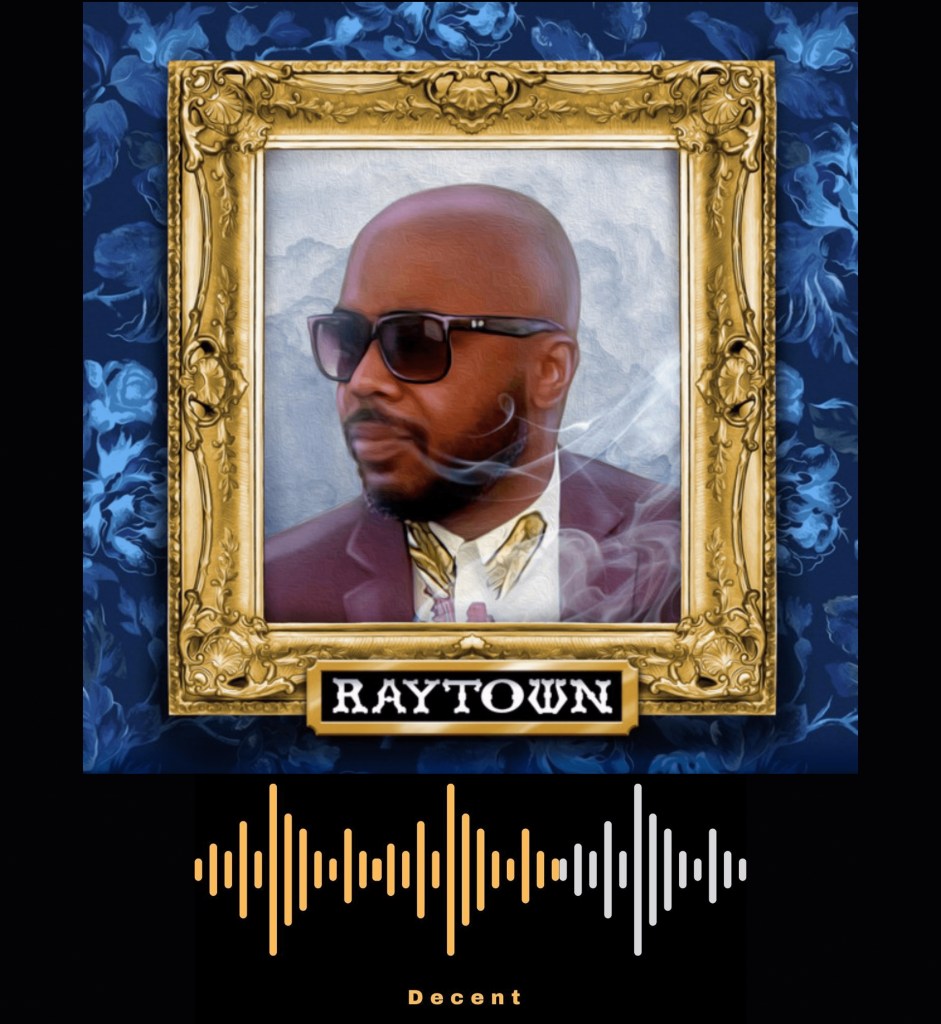
The commanding rap veteran delivers an enjoyable album, which doesn’t quite live up to it’s full promise.
Rockwell Knuckles (aka Corey Barnett) is a St Louis rap veteran of around 2 decades. Perhaps his closest brush with wider prominence was an ear-catching feature on DJ Shadow’s last album. But otherwise, he’s remained an underground concern over the years. His latest project marks a homecoming of sorts.
Across RAYTOWN, there’s references to the 80’s sitcom, Mama’s Family, which was set in Knuckles’ hometown and provides the album’s namesake. And there may be a parallel to draw between Knuckles and the Leonard Oates character referenced on the opening track.
In Mama’s Family, Oates was an unfaithful husband who’d left town, returning years later to win back his ex after getting rich. Knuckles may not have found his riches so the metaphor doesn’t quite fit, but nonetheless, it feels like Knuckles is casting himself in the Oates role here – a flawed character drawn back by love. Albeit, the love here isn’t for an ex, but for his hometown itself and all that encompasses.
I may have overhyped this concept a bit, as it’s really more of a broad theme running through the album; Knuckles reflecting on his successes and failures against the backdrop of his hometown and it’s cast of supporting characters. I was reminded of some of Nas’ recent albums; it often feels like a fairly low stakes affair, full of nostalgia and gratitude for what you have. But rather than a millionaire rap legend, you’re getting it through the lens of an independent stalwart.
When I talk about it being low stakes, that’s largely in the lyrical themes. If you’re new to his music then what you’ll be immediately hit with is Knuckles’ authoritative voice, which makes everything feel high stakes. And, on top of the rapping, he’s equally adept at knocking out a soulful chorus. Regardless of what he’s saying, Knuckles’ voice makes him eminently listenable.
Production-wise, there’s a familiarity here, although it doesn’t sound like much in modern hip-hop. It feels like a slight throwback to the mid-00s with hints of early Kanye and some of the alternative rap that came in his wake, like Lupe Fiasco and Kid Cudi. There’s plenty of catchy choruses and hooks to be had, most notably on Like A Try, which acts as a showcase for Knuckles’ Timbaland-esque sing/raps. The album is relatively poppy in parts but it’s always contrasted with a harder edge from Knuckles’ booming voice or gruff guest verses from the likes of long-time collaborator, Tef Poe.
There’s a self-awareness from Knuckles as he references his underground status on Granny’s Couch, which is part callback to the dreams of his younger self and part recognition that he’s still out there waiting for his break. While on Flatware he contemplates whether it’s still worth it; “hustle hard for 10 years, talking retirement, contemplating if your rusty ass should go buy a brick”.
His hometown characters come into play across various tracks; the women putting up with their men’s shit on Church Ladies League, a deported friend on In My Zone, and he brings some friends along for Steady and Call My Number which play like condensed posse cuts. The closer provides one of the more interesting sections as Knuckles pays thanks to unspecified characters for “being ungrateful”, “for never, ever bringing shit to the table” and various misdeeds. Revealing that these negative forces provide him with the foundation to keep going; while he may be paying tribute to his hometown with this album, it’s not all rose-tinted.
To come back to the Nas reference; that low stakes vibe works well when you’ve got 30 years of well-known rap lore to lean on and keep things interesting, but Knuckles doesn’t have that advantage. While there are interesting lines and broad themes to pull out across the album, individual songs sometimes suffer from a lack of storytelling, which could really tie it all together. There’s also a couple of questionable production choices. The undeniably catchy, military style call-and-response chorus on Steady is overused to the point it becomes grating. And I Just Wanna Thank You contains probably the album’s weakest hook which makes a disappointing outro and lessens the impact of Knuckles’ closing verse.
This is an enjoyable album; albeit with the caveat, or perhaps because of it being a sub-30 minute, low stakes affair. The strength of Knuckles’ voice alone makes him a good listen and I’d suggest he’s well worthy of a bigger audience. But, like my laboured attempt at a metaphorical concept at the start of the review, there’s a sense that there’s just a few connective tissues missing which prevent Knuckles from moving to the next level.
Best Tunes: Granny’s Couch, Like A Try, Call My Number
More Reviews
 No Frills Reviews
Leave a comment