
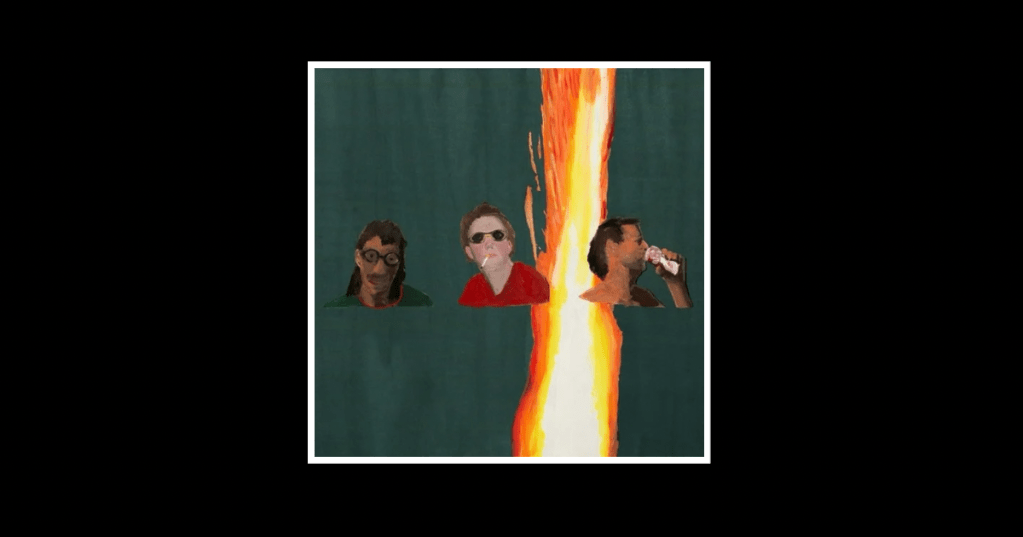
Don’t believe the hype (actually, believe some of it, but it’s focusing on the wrong things)
MJ Lenderman is a current indie rock critical darling. The 25-year-old, North Carolina native’s star has been increasingly on the rise, through his work as a member of country-gaze band, Wednesday, and guest spots on this year’s excellent Waxahatchee record. After much anticipation, his fourth solo album, Manning Fireworks, has received a homogenous flood of acclaim since its release. But, I’m afraid I have to be a contrarian dick and tell you it’s not that good.
Now, let me immediately roll back on that to say, it is good; I like it. To be clear, I’d certainly recommend it; the gentle beauty within these initially subdued songs gradually unfurls with each repeated listen. But it isn’t quite at the level that the fawning consensus suggests. So I feel the need to point out the flaws of an album that I’ve mostly been enjoying.
Much of the hype around Lenderman seems to centre around perceptions of some kind of averageness; the everyman who just happens to be a burgeoning guitar god, the loveable slacker, and, now with this album, he becomes a documenter of sad-but-sympathetic everyday losers.
I have a theory on this. The type of people who become music critics or form cult fandoms around indie artists are dorks (I say this knowingly, I’m a 36-year-old bloke writing about music for free in my spare time). They’re artsy weirdos, obsessives, borderline outsiders. But, just like everyone else, they still want to fit in. And they want you to know that they’re totally normal and can totally relate to normal things. So when an artist comes along that they like but who also has an air of normalcy about them, they latch onto that normalcy. A sort of cult of personality, without a distinctive personality.
That seems to be happening with Lenderman, with the unremarkable in his music being elevated to remarkable purely by virtue of being unremarkable. As if averageness becomes something to be celebrated in of itself. But, I’d suggest he’s limited himself here, by appealing a bit too much to averageness.
I don’t feel like I’m given much reason to really care about the cast of down-and-outs that inhabit these songs. Lenderman undoubtedly has a flair for vivid snapshots of lyrical detail that helps to partly bring these characters to life, but ultimately they’re cliches. Brief glimpses into the imagined lives of degenerate gamblers or middle-aged divorcees. It almost feels like he’s playing it safe by taking on the role of detached narrator, which can leave it slightly lacking in the emotional connection that the musical arrangements deserve.
There’s been praise for his juxtaposition of the mundane with the extraordinary, but his transitions between the two can come off as overly simplistic and slightly try-hard. Like the “Yeah, you know I love my TV, But all I really wanna see, is see you need me” chorus on Joker Lips. Placing a banal observation next to a deeper desire doesn’t automatically elevate it to something greater.
And he’s capable of the occasional lyrical clunker, like “Guess I’ll call you Rip Torn, The way you got tore up”. A bad pun isn’t the mark of a down-to-earth genius, it’s just a bad pun. On the other hand, some of his one-liners are short stories in themselves. The devastatingly deadpan “You once was a baby, and now a jerk” carries a whole lifetime of sadness behind, plus it’s funny.
Neil Young comparisons have been getting thrown around and that’s never more apt than on the title track, with its light country lilt bringing to mind moments from 1970’s After the Gold Rush. But, like Young, Lenderman’s voice isn’t his strong suit. For the most part, it’s irrelevant as his slight quavering lends an additional layer of vulnerability and tension. But, he has the occasional tendency to drift into ponderous, plodding verses where his voice becomes a little too exposed, and his reedy drawl becomes grating.
What is consistently remarkable is Lenderman’s beautiful, understated guitar playing. There’s a restraint as he gives flashes of hard-hitting riffs, only to pull back into controlled, almost serene arrangements, which are ultimately more rewarding. But there is still that sense that he’s holding something back. Perhaps best summed up by the album’s closing moments. After three and a half excellent minutes of pitiful desperation, he teases a big finale, but then delivers 6 minutes of feedback ambience, which is only notable for being un-notable. In that moment, he retreats into the comfort of averageness.
This is a good album, by an artist that has the potential to be great. But to get there, he can’t get too complacent in the comfort of averageness. So let’s celebrate the remarkable, rather than fetishise the unremarkable.
Rating:
Best tunes: Manning Fireworks, Wristwatch, She’s Leaving You
More Reviews
All Hell

Art History
 No Frills Reviews
Leave a comment