
Continuing my journey through the history of heavy metal, we get to the first big landmark.
I previously looked at Randy Holden’s cult classic, Population II, which potentially stakes a claim as the first ever heavy metal album. But, Black Sabbath’s debut, which was recorded roughly at the same time, is the more widely recognised holder of that title. Population II represents metal as a pure expression of heavy music. Black Sabbath, while still heavy of course, also has the (arguably dubious) distinction of ushering in metal as a sub-culture; introducing many of the tropes and signifiers that would go with it.
Just from the album cover, you’ve got the gothic font/creepy picture combo. Then the album begins with thunder and rain sound effects, there’s songs about wizards, and loads of vaguely dark, occult lyrical references. It’s all the sort of eye-roll-inducing stuff that I typically associate with metal. But, I’m coming in with 50+ years of hindsight; this stuff might feel cliché now, but at the time this would have been genuinely fresh and innovative.
I’m not completely new to Sabbath; but my listening has been confined to the three albums after this, which are generally regarded as their real run of classics. So, I had never heard this album previously. Because I like them, I’d always considered Sabbath as hard rock; probably to distinguish between metal, which I don’t like. But, listening with this history of metal concept in mind, I now realise that the bad things about metal are totally their fault. I suppose you can’t completely blame them for the legions of dorks that they would inspire though.
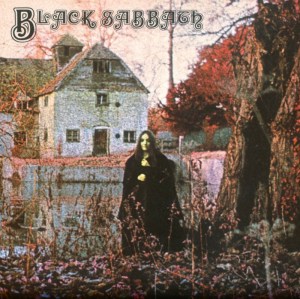
Black Sabbath – Black Sabbath (1970)
A couple of bits of backstory that I found interesting to start. Guitarist, Tony Iommi, had to develop his unique playing style which resulted in their signature heavy guitar sound because his fingertips had been severed in a sheet metal factory accident. That’s cool. And, the story goes that this album was recorded in just a day, with the band finishing up and getting into the pub for last orders. Again, cool. I generally associate metal with dorks playing dress up, but Sabbath were proper rockstars.
Now, we get onto the music. There’s plenty to like here but – and this might be because I came in with the expectation of a classic – it’s not that good.
The opener is a self-titled song, on a self-titled album. I like the idea of bands having their own theme song, there’s something admirably self-indulgent in that. When writing about an album, I avoid reviews which might influence my opinion beforehand. So, I was surprised when I later read that this is considered one of their best ever tracks, because it’s pretty boring. It’s not bad, just too long; it’d probably be really good if the six-minute runtime was condensed to four. Although it is essentially the origin of doom metal; deep trudging guitars leading the way, while Ozzy goes on about being chased by a monster or something. It gets really good in the final third as it picks up momentum, but the slog of the opening isn’t interesting enough to justify its length. And the lyrics are so surface-level that they just seem stupid, rather than actually dark.
My criticism would be similar across the album. High points in every song that drag out until momentum fades. The Wizard is a really solid heavy blues tune, with the harmonica parts making it the most unique song on here. But, it feels like an under-developed idea that chugs along without really going anywhere. And, it’s about Gandalf FFS.
…Behind the Wall of Sleep and then N.I.B. is a strong combo and starts to really sound like classic Sabbath. Underpinned by a doomy dirge, and punctuated by shitloads of riffage and the irresistible simplicity of Ozzy’s vocals, which makes these weird jams into singalongs. And there’s actually depth in the lyrics, with N.I.B. being from the perspective of the devil falling in love; it doesn’t just come off as darkness for the sake of darkness. About Ozzy’s vocals; I don’t mind them and they’re obviously distinctive, but if you want to tell me that they’re terrible then I probably wouldn’t argue.
Evil woman is perfectly cromulent hard blues. We then get two tracks that go deep into instrumental jam territory, and weirdly it’s the longer one that maintains momentum. Sleeping Village is just under four minutes and is fine, but feels slightly aimless. Whereas Warning is ten minutes, with five minutes purely instrumental in the middle, but it actually pulls it off as it diverts in different directions and has riffs for days.
Listening to this for the first time in 2023, I don’t think it holds up as a classic. Particularly, knowing that Sabbath themselves would go on to almost immediately do this style better in the coming years. But, there’s no doubt this was a game changer in music history, for better and for worse.
Rating:
More Metal Mondays


Leave a comment